Case study · solo product
LiftIQ: an iOS strength coach grounded in peer-reviewed sport science.
Solo-built · 1,763/1,763 tests passing · ~$8/month infra · Get it on the App Store →
LiftIQ is an iOS app that programs resistance training the way a thoughtful S&C coach would. Every recommendation traces back to the ACSM 2026 Position Stand on resistance training, not vibes from a forum.
The app is an experiment in how far a solo engineer can take an AI-assisted stack when the goal is a defensible, science-grounded coach, not a fitness chatbot.
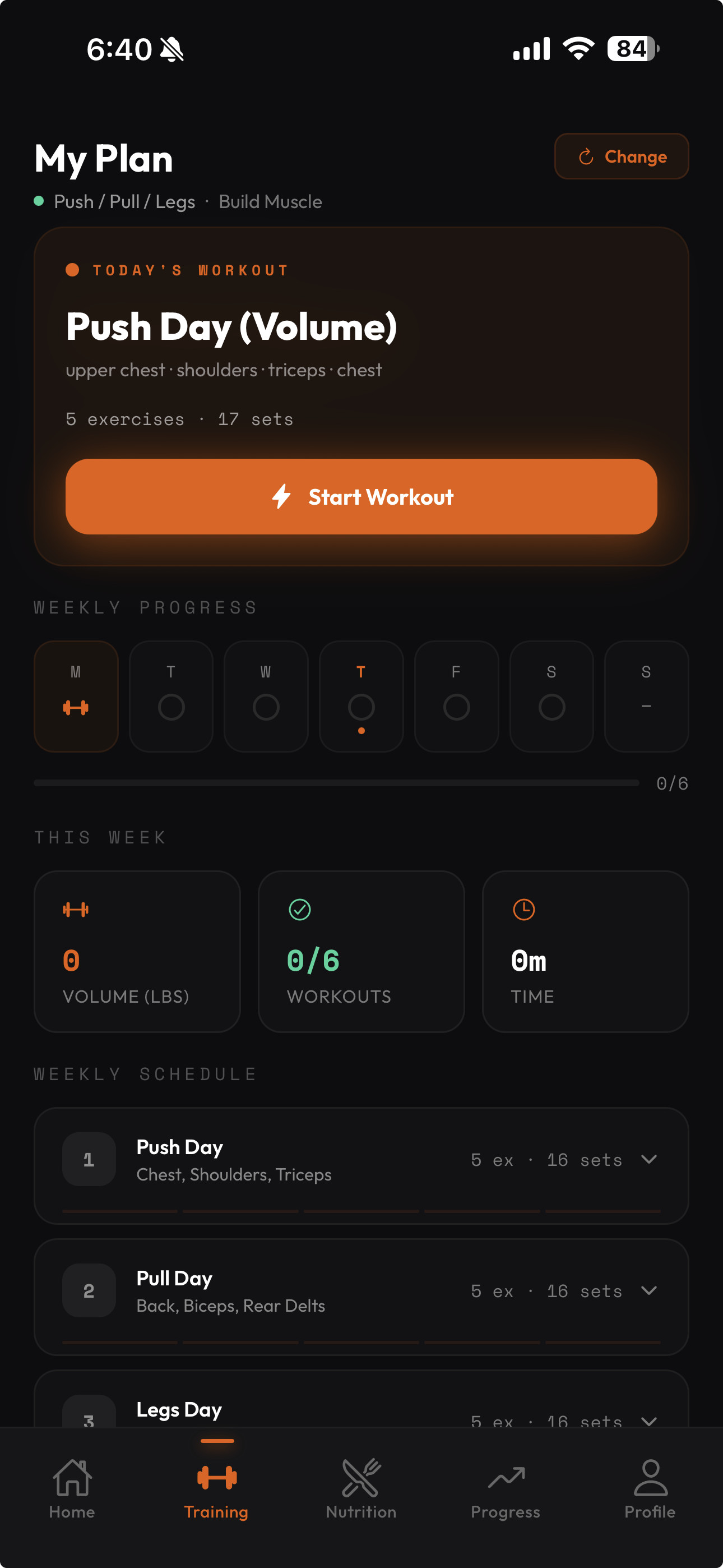
Plan · ACSM-grounded prescription
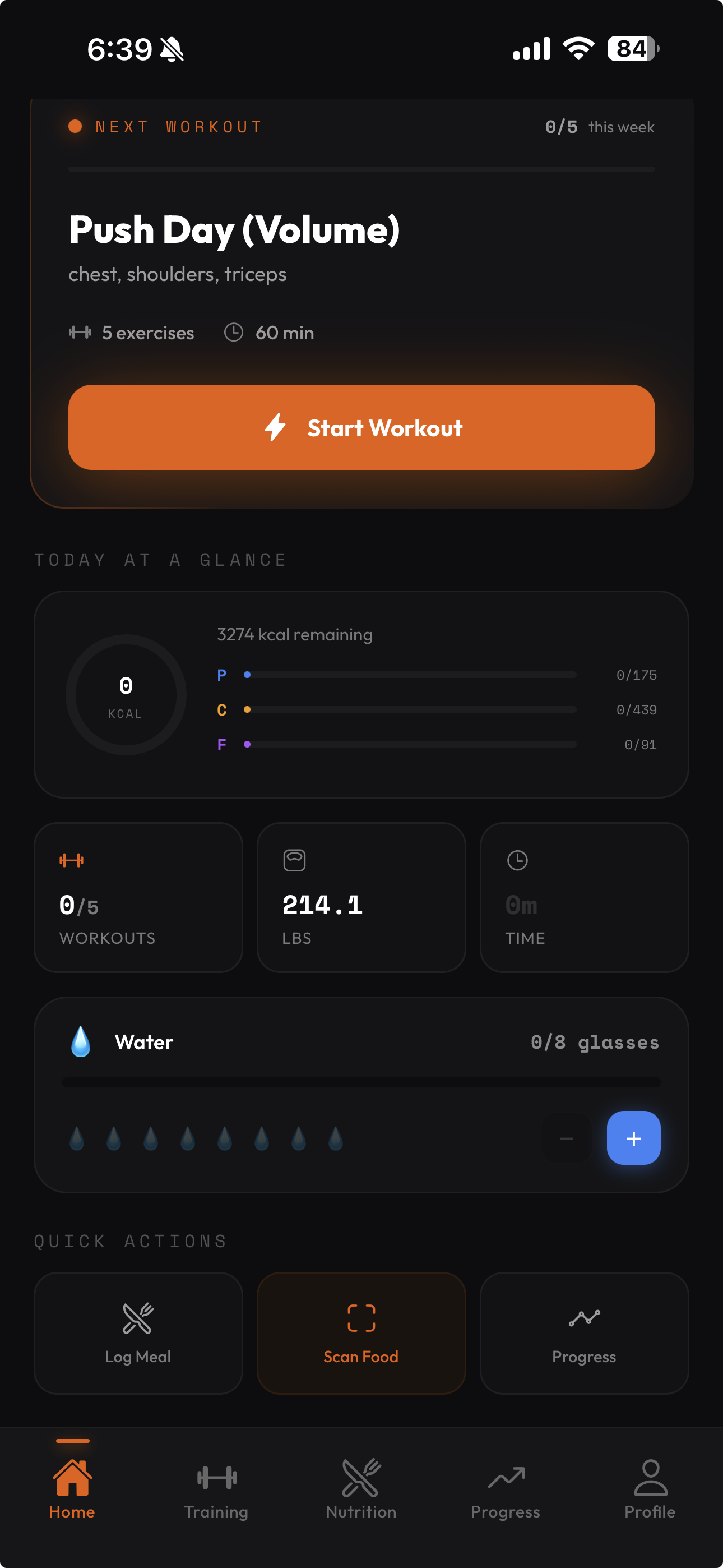
Home · what users see daily
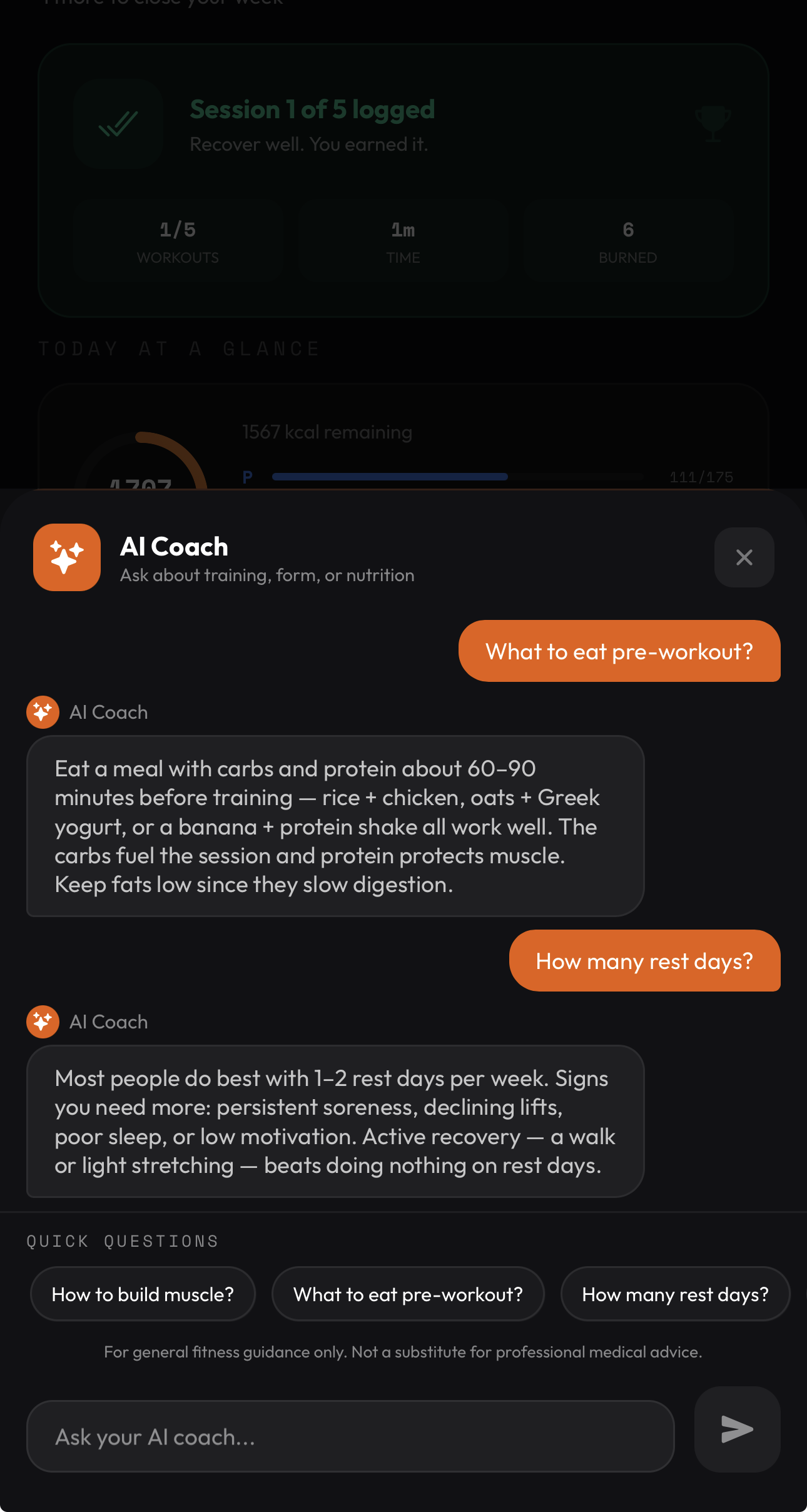
AI Coach · the coaching layer in action
Stack
- Client: SwiftUI on iOS, native-first.
- Backend: small services on cheap infra, sized so the whole thing runs on roughly $8/month and stays there as users grow.
- AI layer: Claude as the reasoning brain, with a structured prompt/eval pipeline rather than free-form chat.
- Tests: 1,763/1,763 passing, run on every change. Tests aren't theatre. They cover the programming logic, the AI guardrails, and the science mappings.
AI architecture
Three-layer pipeline · each independently evaluated
Layer 1
Intent
Interpret what the user actually wants from a session (push day, deload, return-to-training) without 12 questions.
→ held-out eval set
Layer 2 · ACSM 2026
Programming
Generate the workout: exercise selection, sets, reps, RPE/RIR. AI proposes, the ACSM schema disposes.
→ held-out eval set
Layer 3
Coaching
Explain, encourage, adjust based on yesterday’s session, today’s readiness signals, and known constraints.
→ held-out eval set
Each layer is evaluated independently. The middle layer holds the ACSM mapping that prevents the model from drifting into recommendations the science doesn’t support.
The AI work is structured into three layers, each with its own evaluation:
- Intent layer. Interpret what the user actually wants from a session (push day, deload, return-to-training, etc.) without asking 12 questions.
- Programming layer. Produce the actual workout: exercise selection, sets, reps, RPE/RIR, rest windows, progression rules. This is where the ACSM mapping lives.
- Coaching layer. Explain, encourage, and adjust based on yesterday's session, on-the-day readiness signals, and constraints.
Each layer is evaluated independently with a small held-out test set. If a prompt change moves intent accuracy without moving programming quality, I can see it.
The ACSM 2026 Position Stand mapping story
The hardest engineering problem wasn't the model. It was the mapping. The ACSM 2026 Position Stand is a long, dense, research-driven document. Translating its recommendations into something a workout-generation system can act on required:
- A structured schema for "what does ACSM actually recommend, given this goal, this training age, these constraints?"
- A reviewer step that flags any AI-generated program that drifts outside the recommended ranges (volume, intensity, frequency, exercise selection diversity).
- A way to hold the AI accountable when it gets creative. The AI proposes, the schema disposes.
This is the part of the app I'm proudest of. It's the reason "AI fitness app" isn't a slur in the LiftIQ context.
Result
- Live on the App Store with bilingual UX (EN + ES).
- 1,763/1,763 test suite running on every commit, covering programming logic, AI guardrails, and the ACSM mapping schema.
- ~$8/month infra, stable as users grow. Sub-$10/month forces architectural honesty: anything I'd build on top has to earn its cost.
- A defensible answer to "why should I trust this app's recommendations?" Every workout traces back to a peer-reviewed source, not a forum thread.
What this shows
- I take ambiguous, multi-disciplinary work (sport science + AI architecture + native iOS + ops) and turn it into a shippable product end-to-end.
- I treat evals as a product surface, not a vanity metric. The 1,763-test suite is what lets me ship at solo-founder speed without breaking the science.
- I make defensible technical choices when the criteria aren't obvious: native iOS over cross-platform (UX), schema-constrained AI over free-form (defensibility), heavy testing over fast prototyping (durability).
- I own the whole stack, from research-paper schema to App Store listing, and ship it bilingual on day one.
Try it
If you want to talk shop on AI architecture, evals, or the ACSM mapping work, get in touch. Happy to compare notes even if it's not a fit.